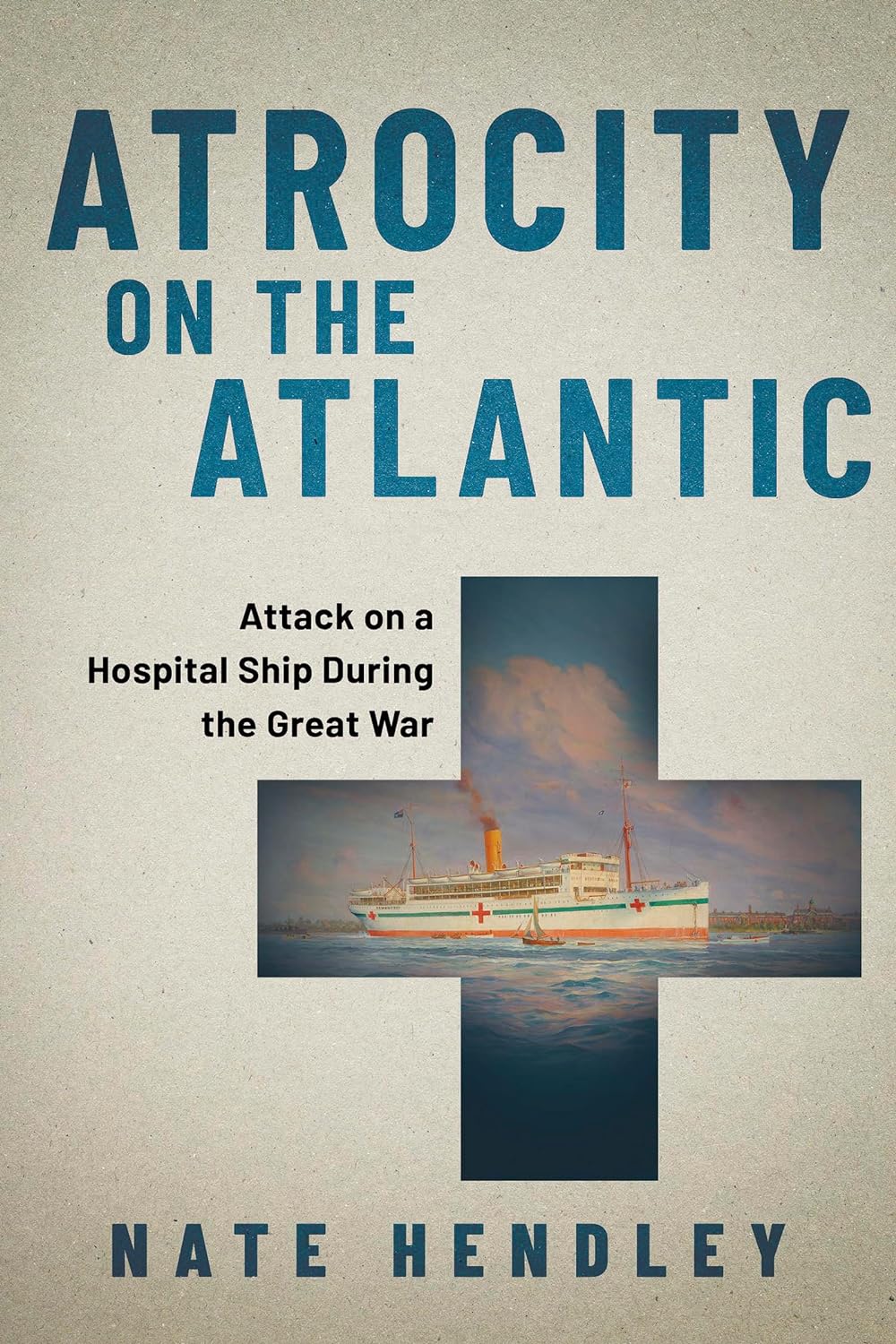
Atrocity on the Atlantic is available for order at Amazon, Barnes and Noble, Chapters-Indigo, and from the publisher.
Details:
On the evening of June 27, 1918, the Llandovery Castle — an unarmed, clearly marked hospital ship used by the Canadian military — was torpedoed off the Irish Coast by U-Boat 86, a German submarine. There were 258 people on board at the time: a British crew and 94 members of the Canadian Army Medical Corps (CAMC).
Sinking hospital ships violated international law. To conceal his actions, the U-86 commander directed the submarine deck gun to shell survivors huddled in lifeboats. Only one lifeboat containing two dozen people escaped the massacre. Global outrage ensued.
The sinking of the Llandovery Castle was adjudicated at the Leipzig War Crimes Trials, an attempt to establish justice after hostilities ceased. The Llandovery Castle case resulted in an epochal ruling that guided subsequent war crime prosecutions, including the Nuremberg Trials.
Atrocity on the Atlantic explores the Llandovery Castle sinking, the people impacted by the attack, and the reasons why this wartime atrocity was largely forgotten.
Reviews:
“The sinking of the Llandovery Castle was the worst war crime committed against Canadians in the First World War. The prosecution of this case set the stage for the Nuremberg war crimes trials a generation later. Nate Hendley has done a great job of telling this important story. It’s a part of our history that needs to be remembered.” ―Mark Bourrie, author of Crosses in the Sky and Bush Runner
“Atrocity on the Atlantic, Nate Hendley’s gripping history of HMHS Llandovery Castle, is ultimately about a reckoning. It is more than a submariner tale or the sort of abandon-ship yarn that makes for a full-length film and a haunting award-winning pop song, though both plausibly could someday come of it. It offers another reason to consider the 1914–18 struggle a military and moral catastrophe, though after all these years no new reasons are required. It is a story about war and war crimes, about humankind’s efforts to apply moral standards to its most brutal undertaking, even as today’s newspapers, newscasts, and news outlets provide ample evidence of the futility of such an endeavour.”—Literary Review of Canada
“Atrocity on the Atlantic explores an almost forgotten event in Canadian history, the criminal attack and sinking of a Canadian Hospital ship by a German U-Boat during the First World War.
Nate Hendley has provided an expertly researched narrative of this event. Through detailed accounts of the victims of the attack from letters home, newspaper accounts, personnel files, and interviews with family he gives life and voice to the people that lost their lives that horrific night.
As a Canadian Naval author and historian myself, I highly recommend Atrocity on the Atlantic.” —Roger Litwiller, Canadian Naval Historian and Author
“Hendley neither delves into psychoanalysis nor uses unnecessary adjectives. He is a crime writer. He gives the Llandovery Castle a crime writer’s treatment. It works. The sinking was simple murder, a gangland slaying at sea … a compelling account of a crime too long forgotten.”—Blacklock’s Reporter
“Mr. Hendley’s writing is authoritative but never dry. He has plotted the book in a sensible order, and the pacing of events is agreeably done. Lots of backstories on relevant figures and other moments in the war and the subsequent war crime trials, both after the Great War and WWII. Exemplary reading for those interested in naval history as well as war history in general.”—The Seaboard Review
“Hendley has a unique gift for dusting off history and pairing insightful perspective with an entertaining story for today’s readers. Set late in the Great War, Atrocity on the Atlantic offers an intriguing take on the events around the Llandovery Castle and its lasting cultural impacts. Human decency and the limitations of men during conflict are as relevant now as those fateful days in 1918.”— Aaron Huggett, Director of Battle for the Western Front
“Engaging and illuminating, Hendley’s book brings this forgotten loss to life, detailing the people at the heart of it, their lives leading up to the fateful voyage … Meticulously researched, this book pulls together the details from innumerable first-hand accounts, letters, military records, court documents, and newspaper articles of the time—a huge amount of work that has paid off in an authoritative telling of the Llandovery Castle’s fate and the aftermath that resounded for decades before fading from popular memory … This is a must-read for anyone interested in Canadian history, particularly of both the wars the country found itself in.”—The Miramichi Reader
 Nate Hendley