
I offer online and in-person presentations. I am available to speak at libraries, schools, bookstores, etc., anywhere in the Greater Toronto Area (GTA).
My presentations are all roughly one hour in length (though they can be longer, upon request) and include time for audience questions.
Here are my main presentations:
NEW – Mounties, Marriage, and Murder
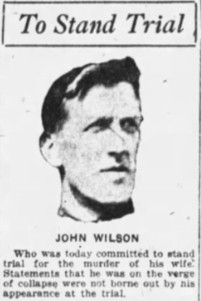
On the surface, John Wilson seemed to be a Canadian success story.
After emigrating from Scotland to the Prairies in 1912, Wilson joined the prestigious Royal North-West Mounted Police (RNWMP). He fell in love with a Canadian woman named Jessie and was settling into life in a new country.
To Wilson’s consternation, his wife, Mary, whom he had abandoned in Scotland along with his children, unexpectedly showed up in Saskatchewan.
Wilson went along with this surprise reunion—for a time.
Then, Mary disappeared and Wilson went from Mountie to murder suspect.
A bizarre real-life mystery, based on a script I wrote for the Canadian True Crime podcast.
NEW – Contraceptive Controversy: Sex, Birth Control, and Advertising
Harold Fine set out to sell condoms, not change the law.
The Toronto entrepreneur made a roaring trade peddling prophylactics in the 1950s, only to become a victim of moralistic sex laws.
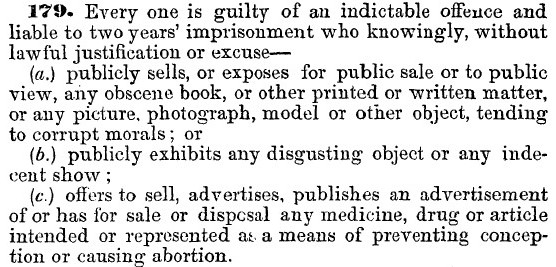
Canada’s inaugural Criminal Code of 1892 made it a crime to advertise products or medicines that prevented conception or induced abortion. People with money and means could get around the law, but low-income couples struggled to access legal birth control.
These regulations were still on the books in 1961 when Harold Fine was arrested by morality police and convicted in a Toronto courtroom.
While he lost his trial, Fine’s battle raised awareness of the issue and led to pressure from lobby groups to reform the law.
Sweeping legislative changes would eventually permit the commercial marketing of the most personal of products for Canadians.
A look at an unlikely crusader and how sex used to be regulated in Canada.
NEW – The Iron Heel of Ruthlessness: Canada’s Hysterical Overreaction to Left-Wing Radicalism
The 1920s and 30s marked the rise of left-wing radicalism in Canada, and a brutal crackdown from the powers that be.
Following the defeat of the Kaiser, Communism had become the new menace to inspire fear and loathing across the nation.
Postwar domestic labour agitation, combined with the Bolshevik Revolution in Russia inspired a hysterical overreaction within all levels of government in Canada.
Ottawa made it a crime to advocate for violent revolution while Quebec padlocked premises used by Communists.
In Toronto, hardline Toronto Police Chief Dennis Draper encouraged the rough handling of left-wing agitators. In August 1929, Toronto Police ruthlessly beat peaceful protesters at a Communist rally, to the approval of most of the city’s press and politicians.
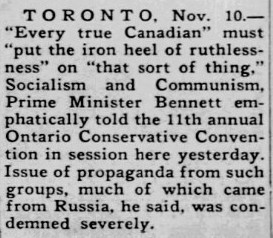
While a few critics spoke out, most Canadians agreed with Prime Minister R.B. Bennett, who said that leftism should be “crushed with the iron heel of ruthlessness.”
A look back at Canada’s frenzied overreaction to left-wing radicalism.
Atrocity on the Atlantic: The Long Wake of a Forgotten War Crime Against a Canadian Hospital Ship
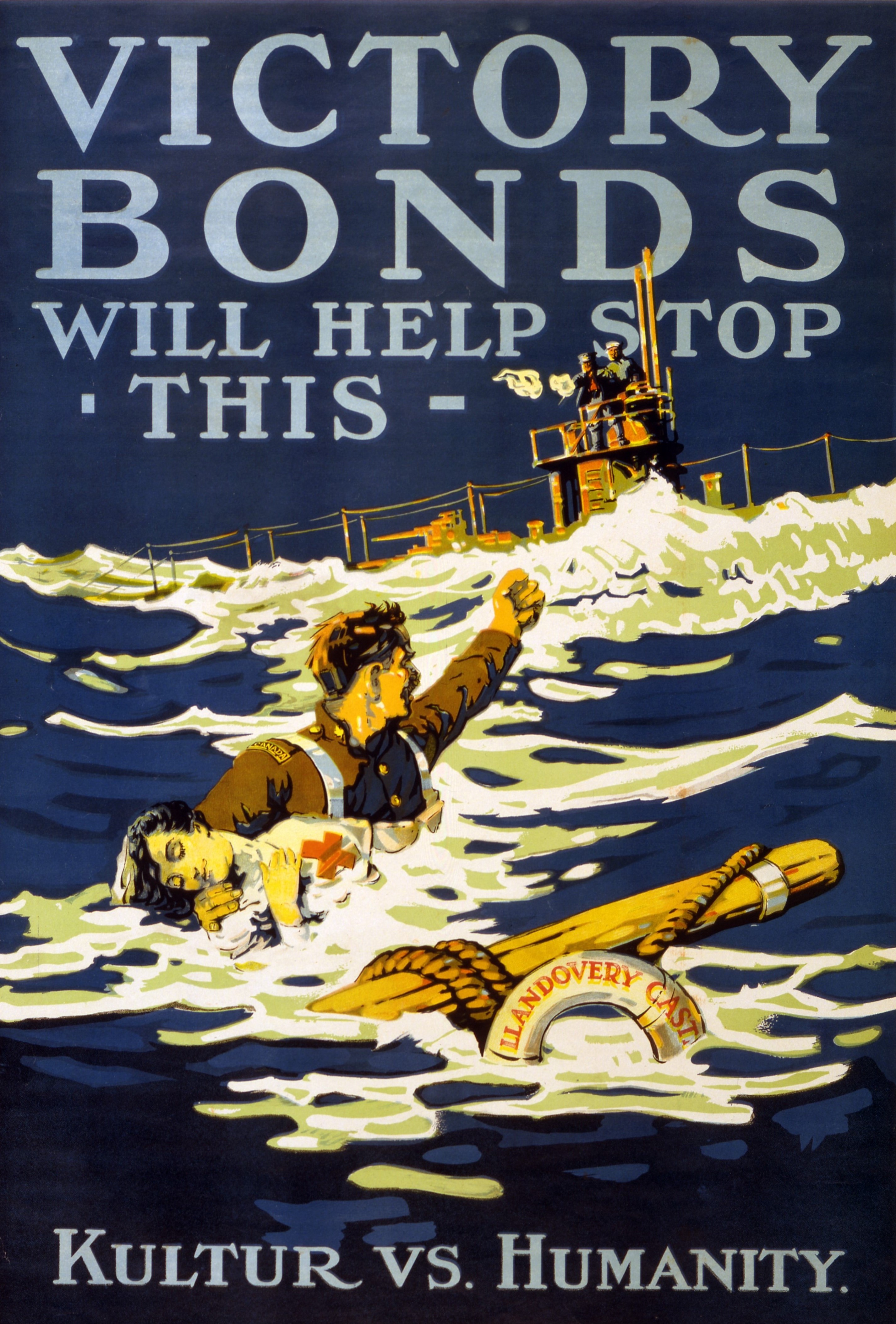
My book Atrocity on the Atlantic (published February 2024 by Dundurn Press) offers a full account of an appalling wartime tragedy.
On the evening of June 27, 1918, an unarmed, clearly marked Canadian hospital ship called the Llandovery Castle was torpedoed off the coast of Ireland by a German U-boat.
Sinking hospital ships violated international treaties, so the sub commander tried to kill the survivors to conceal his war crime.
Most of the ship’s crew and Canadian Army Medical Corps (CAMC) personnel on board—including fourteen female nurses—died. A handful of survivors escaped to bear witness, leading to global outrage and an unprecedented ruling in a German courtroom that forever changed war crimes prosecutions.
And yet, the sinking of the Llandovery Castle was soon forgotten.
The Beatle Bandit: How One Man’s Rampage Led to a Nationwide Debate About Guns, the Death Penalty and Insanity Pleas
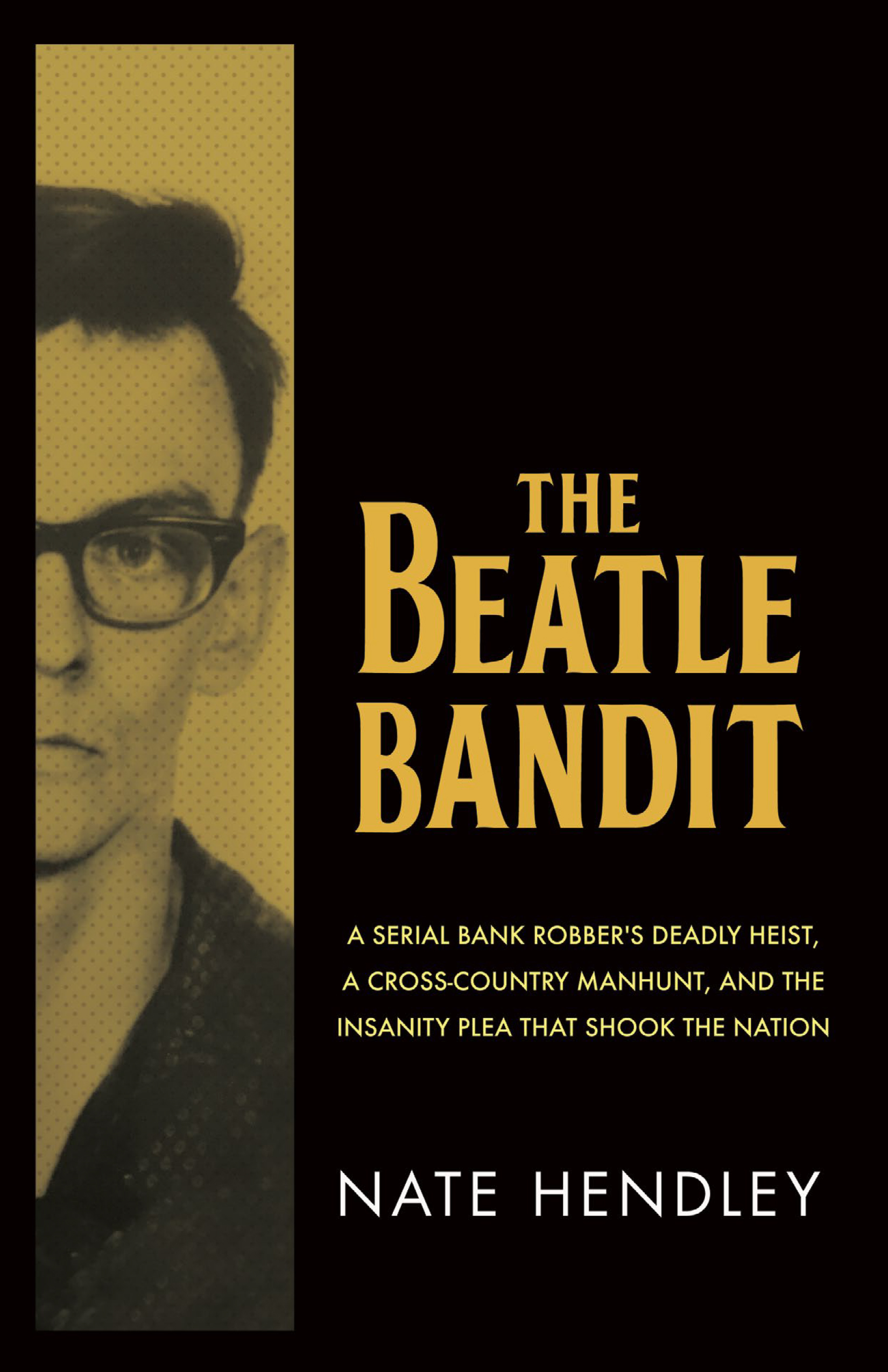
My book, The Beatle Bandit (published 2021 by Dundurn Press) tells the story of Matthew Kerry Smith, an intelligent but troubled young man who robbed banks in the Toronto area during the early 1960s to finance a revolution.
On July 24, 1964, Smith disguised himself in a Halloween mask and a “Beatles” wig and held up a branch of the Canadian Imperial Bank of Commerce in North York, Ontario. Smith killed a bank patron who intervened in the robbery and escaped with over $25,000. The “Beatle Bandit” case fueled a nationwide debate about gun control, insanity pleas, and the death penalty.
The Beatle Bandit won the Crime Writers of Canada 2022 Award of Excellence for Non-Fiction and was nominated for a 2022 Toronto Heritage Book Award.
As published by Dundurn Press, The Beatle Bandit is available in paperback, e-book, and audiobook formats at Amazon, Barnes and Noble, and Chapters-Indigo.
My talk examines Smith’s life, his multiple bank robberies, and the bizarre aftermath of his murderous 1964 CIBC heist.
TESTIMONIAL
“In November 2021 Nate Hendley gave his third presentation to our Kitchener-Waterloo Probus Club. This talk, conducted on Zoom, was about his latest book The Beatle Bandit.
Once again Nate presented a very well-researched and interesting true-crime tale. He has a compelling and captivating presentation style, and our members thoroughly enjoyed his talk. Nate has the ability to transport you to the ‘scene of the crime’ and make you feel like you are personally experiencing all of the details and unique aspects of the crime.
In addition, each of Nate’s presentations has had a lesson that is relative to the current issues of the day such as gun control, mental health, and the rights of suspects while being interrogated among others.
We look forward to inviting Nate back to our club for another presentation when he is available.”—Kerry Long, Chair of the Program Committee, Probus Club of Kitchener-Waterloo, Ontario
The Art of the Con: Notorious Scams, Swindles, and Frauds
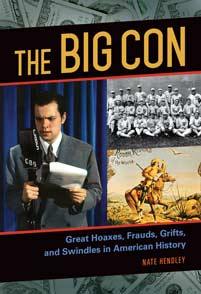
My book, The Big Con (published in 2016 by ABC-CLIO) looks at scam artists such as Bernie Madoff and Charles Ponzi (from whom we get the term “Ponzi scheme”), online romance fraud, the Nigerian Prince email, disaster fraud, pyramid schemes, medical fakery and other forms of deceit.
This talk includes commentary about how to avoid being scammed and why old cons continue to flourish under new guises.
TESTIMONIAL
“Nate Hendley recently gave a talk about cons and scams at our Probus club. I found that the presentation was very well-researched and documented. Nate’s style of delivery is very engaging and informative. Our members really enjoyed the presentation; it was one of the best of the year. It’s obvious that Nate is very well qualified in his area of expertise.”—Kerry Long, Probus Club of Kitchener Waterloo, Ontario
The following interview, recorded in September 2016 with Talk Radio Europe will give you a sense of what my presentation about “The Art of the Con” is like:
The Boy on the Bicycle: A Forgotten Case of Wrongful Conviction in Toronto
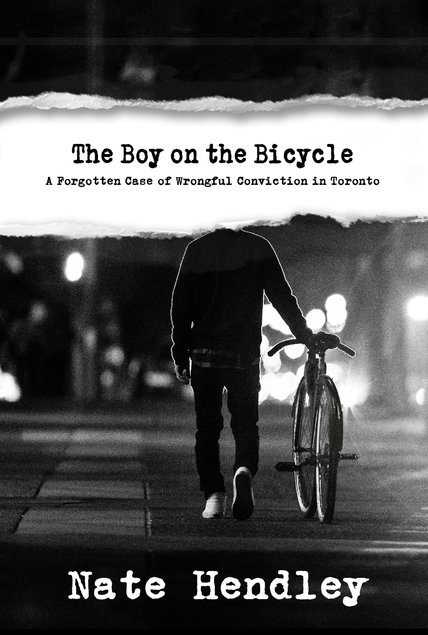
My book, The Boy on the Bicycle: A Forgotten Case of Wrongful Conviction in Toronto, tells the story of Ron Moffatt.
In 1956, when Ron was 14 years old, he was accused of murder and subjected to a police interrogation without a lawyer or parent present. As a result of this grilling, Ron falsely confessed to killing a child on the deserted grounds of the Canadian National Exhibition.
While Ron was in custody, the real culprit struck again.
This little-known Toronto tragedy involves a coerced confession, a fumbled police investigation, and a crusading lawyer who sought to prove Ron’s innocence.
As published by Dundurn Press, The Boy on the Bicycle is available in e-book and audiobook format at Amazon, Barnes and Noble and Chapters-Indigo.
The Boy on the Bicycle was nominated for a Crime Writers of Canada book award.
My talk includes commentary about wrongful convictions, false confessions, and police interrogation protocols for young offenders.
TESTIMONIAL
“Nate Hendley spoke [October 19/2018] at the LIFE Institute at Ryerson University. He was invited to discuss his recent book, The Boy on the Bicycle. Nate spoke passionately as he knows the individual who was wrongfully convicted. He was, therefore, able to give a personal perspective on the case from those involved in addition to the well-researched written material in the book. His lecture generated many intelligent questions about induced confessions and the wrongfully convicted. Nate would be a welcome lecturer in the future at the LIFE Institute.”—Sandy Kingston, LIFE Institute, Course Coordinator
The following interview, recorded in August 2018 for the Stuph File Program podcast will give you a sense of what my presentation about The Boy on the Bicycle is like:
Capone and Schultz: A Swaggering Crime Boss and a Mobster Misfit
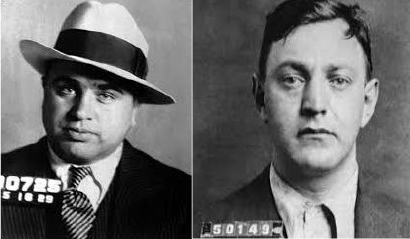
Al Capone and Dutch Schultz epitomized certain aspects of American gangster culture in the 1920s and 1930s.
Capone was a major mob boss in Chicago while Schultz was a force to be reckoned with in New York City.
While sharing certain similarities (both men rose to power in part through bootlegging—selling illegal alcohol during Prohibition—and were beset with tax problems), the personalities and eventual outcomes of these two crime figures were drastically different.
This presentation is based on my books about Dutch Schultz and Al Capone.
TESTIMONIAL
“Nate recently gave a talk at the High Park Library for our ‘True Crimes’ series, entitled ‘Dangerous and Deadly: Mob Boss Al Capone and Dutch Schultz’ about two famous criminals whose biographies he had penned. A good author knows what his characters are carrying in their pockets and what kind of bullets his characters use in their guns. Nate helped us understand where these men came from, what their motivations were, and what caused their downfalls. We came to know, understand, and perhaps admire these very quirky characters. It was thrilling and scary and perfect for Halloween.”—Meghan Edmonds, Sunnyside Historical Society
Edwin Alonzo Boyd: The Bank Robbing Media Darling
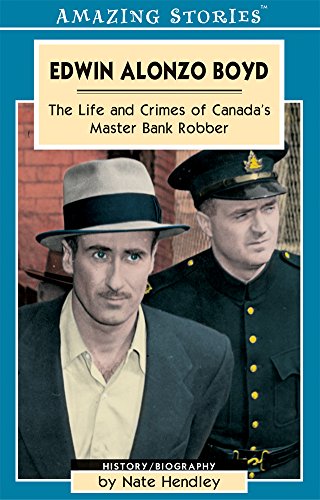
Edwin Alonzo Boyd dreamed about becoming a movie star but ended up robbing banks.
Working solo and as head of the so-called Boyd Gang, Edwin became Canada’s best-known bank robber in the 1950s.
Boyd and his accomplices escaped from the Don Jail twice, earning public outrage and admiration in equal measures.
While two members of the Boyd Gang were hanged for murdering a Toronto cop, Boyd maintained a reputation as a “gentleman bandit” who never harmed anyone during his heists.
Was this media image truly justified?
After all, Boyd himself admitted he “did a few things that could have got me hung.”
Find out the truth about this charismatic criminal in a fast-paced presentation based on my book, Edwin Alonzo Boyd: The Life and Crimes of Canada’s Master Bank Robber.
I charge reasonable rates and require minimal equipment. For more information, email me at nhendley@sympatico.ca

